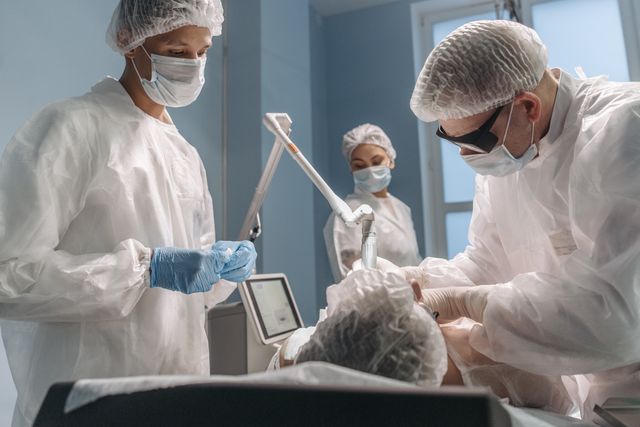

Fractional laser technology, a development in laser skin resurfacing introduced in the early 2000s, eliminated the trade-off between effectiveness and downtime by treating only a fraction of the skin surface during each session and leaving surrounding tissue intact. The untreated tissue serves as a biological reservoir for rapid repair. Thus, recovery times are shorter than those associated with fully ablative procedures.
How Does the Technology Actually Work?
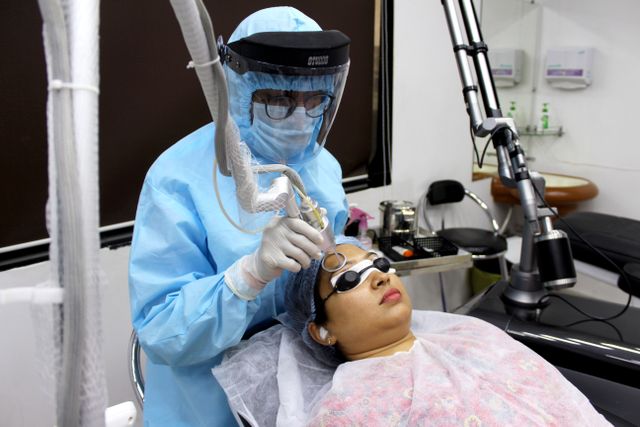
Fractional laser systems generate thousands of tiny treatment zones within the skin rather than heating or ablating the whole surface. The controlled zones of tissue injury initiate the two processes that lead to visible improvement in texture, scarring, and photoaging: collagen remodelling and epidermal regeneration. As clinical research has demonstrated, fractional treatments can treat 5% to 35% of the skin surface during a single session and still result in measurable collagen synthesis. This range indicates how the same platform can be configured for a conservative first session or an aggressive revision treatment.
The growing popularity of fractional lasers has also increased interest in related dermatological procedures. Patients visiting for scar revision or photoaging treatment request concurrent assessments for other skin concerns such as mole removal Sydney clinics. The same patient population interested in minimally invasive skin technology may inquire about suspicious lesions during the same consultation. This crossover represents a larger shift in the way patients view skin health. It is not seen as a series of standalone concerns but as a group of interconnected conditions that are best addressed by expert assessment in the same place.
Ablative Vs. Non-Ablative, The Choice That Changes Outcomes and Risk
The major clinical distinction between fractional laser systems is between ablative and non-ablative systems. Ablative fractional lasers (CO₂ and erbium) physically remove microscopic columns of skin tissue. Non-ablative systems heat deeper dermal structures without removing most of the epidermis. A study comparing 730 patients found that fractional CO₂ lasers produced greater improvement in wrinkles and nasolabial folds than lower-energy non-ablative alternatives, but at a higher complication rate (6.4% for fractional CO₂ vs 3.3% for 1550-nm non-ablative).
Overall, the rate of adverse events across all fractional laser categories was fairly low at 4.2%, and most complications resolved completely with treatment. That figure means something very different if the patient in the chair has darker skin. For these patients, the risk of post-inflammatory hyperpigmentation is significantly greater than in lighter phototypes. The decision to use an ablative vs. a non-ablative system and which specific parameters to use is of much greater importance.
Where Is the Scar Evidence Strongest, And Where Does It Break Down?
Fractional laser has the strongest clinical evidence base for acne scar treatment. One study reported 50% to 75% improvement in acne scarring in 18 of 29 patients treated with 1550-nm fractional photothermolysis. Five patients achieved greater than 75% improvement, and one patient showed less than 25% improvement. Patient satisfaction matched clinician assessments. This means patients were perceiving the same changes that clinicians were measuring rather than being underwhelmed by outcomes that appeared better on paper than in the mirror.
What Does the Promotional Framing Tend to Leave Out?
Although the incidence of these complications from fractional laser treatment is relatively low, clinical reviews have recorded acne eruptions, bacterial infections, prolonged erythema, herpes simplex reactivation, and postinflammatory hyperpigmentation. Of greater importance to many patients, however, is the variability in outcomes that the published literature consistently demonstrates. Some patients need multiple sessions before there is a measurable benefit. Others have little visible improvement despite significant financial investment. Outcomes depend on age, scar type, skin quality, laser settings, and concurrent therapies in ways that cannot be fully anticipated before treatment is initiated.
The future of fractional dermatology is focused on reducing that variation through individualisation, such as AI-assisted treatment planning, combination approaches that use micro-needling and platelet-rich plasma, and more precise wavelength selection. The evidence is still in favour of fractional laser as a valuable technology. Patients who enter the room with realistic expectations of what the technology can do for their skin, their scar type, and their treatment history rather than the general promise of the technology get the most out of it.